
Topic-wise PYQ (Previous Year Questions) practice is one of the most reliable strategies for UPSC preparation. It helps aspirants identify recurring themes, understand examiner expectations, and strengthen conceptual clarity across subjects.
Yet, many candidates struggle with:
- Missing important questions
- Repeating the same PYQs unknowingly
- Losing track of coverage across the syllabus
The problem is rarely effort.
It is the absence of a structured, trackable system.
This blog explains a step-by-step, methodical approach to topic-wise PYQ practice — and how tools like Yooki can quietly support this process without replacing your thinking.
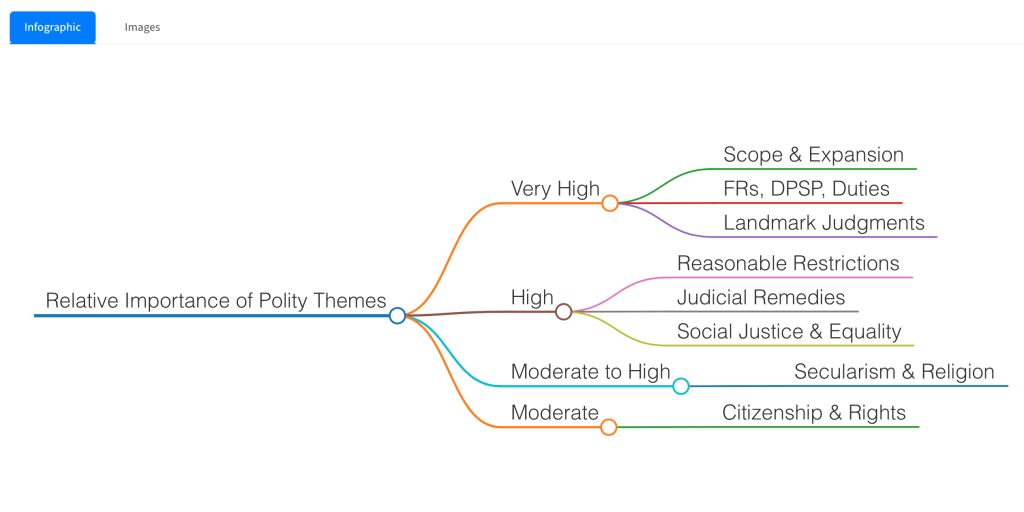
Why Topic-Wise PYQ Practice Matters
UPSC does not test random facts.
It tests concepts, patterns, and application.
When PYQs are practiced topic-wise instead of year-wise:
- You see how the same idea is asked differently
- You understand why certain topics recur
- You build depth, not just recall
This shift — from questions as memory checks to questions as thinking probes — is what separates average attempts from strong ones.
Step-by-Step Strategy for Topic-Wise PYQ Practice
1️⃣ Source Compilation
Begin with authentic PYQs only.
- Download official UPSC Prelims and Mains papers (last 10–15 years)
- Use trusted compilations (Vision IAS, Insights, ForumIAS, or self-made PDFs)
- Ensure coverage of:
- GS Papers (Prelims + Mains)
- Optional subject PYQs
👉 Avoid mixing mock questions at this stage. PYQs define the standard.
2️⃣ Topic Mapping (Where Most Aspirants Falter)
Create a micro-syllabus for each subject.
For example (Polity):
- Constitutional Framework
- Fundamental Rights
- DPSPs
- Federalism
- Governor
Now, map every PYQ to its most relevant topic or sub-topic.
This can be done using:
- Excel / Google Sheets
- A dedicated notebook
- Digital tools that allow tagging and filtering
This is where platforms like Yooki can help — by letting you organize questions by topic and meaning, rather than just by year or keyword, reducing the risk of missed or duplicated questions.
3️⃣ Systematic Topic-Wise Practice
Instead of solving year-wise papers:
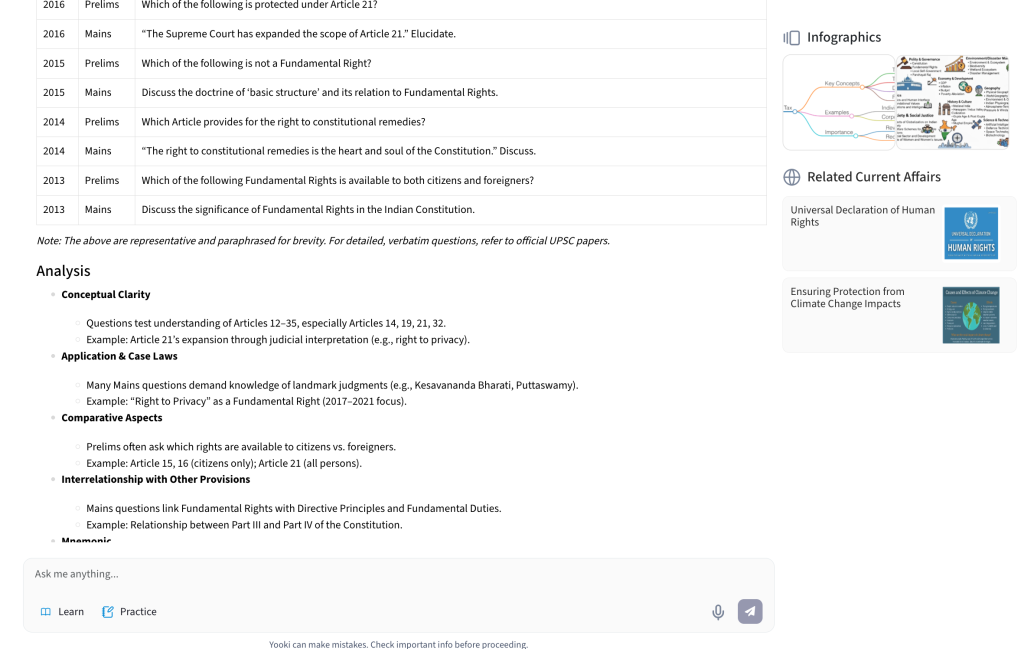
- Pick one topic (e.g., Fundamental Rights)
- Attempt all PYQs related to that topic together
- Solve in exam conditions:
- Time-bound
- No notes
- No hints
This approach reveals:
- Conceptual gaps
- Repeated examiner angles
- Areas where your understanding is shallow
Yooki can be useful here as a thinking companion — helping you reflect on what dimensions a question is testing, without giving you ready-made answers to memorize.
4️⃣ Tracking & Scheduled Revision
Without tracking, PYQ practice becomes scattered.
Maintain a tracker to mark:
- Attempted questions
- Accuracy
- Difficulty level
Use:
- Checkboxes
- Color codes
- Status columns
Digital systems (including Yooki) make it easier to:
- See what you’ve covered
- Identify neglected areas
- Plan revision cycles every 2–3 weeks
The goal is not automation — it is visibility.
5️⃣ Error Analysis & Focused Notes
After each session, pause and analyze.
Ask:
- Why did I get this wrong?
- Was it a concept gap, interpretation error, or haste?
Update short, living notes with:
- Frequently repeated themes
- Common traps
- Confused concepts
Instead of expanding bulky notes, focus on clarifying thinking.
Tools like Yooki can assist by helping you revisit the idea behind the question, not just the answer.
What You Gain from Topic-Wise PYQ Practice
✅ Comprehensive Coverage
- Ensures no syllabus area is ignored
- Prevents blind spots in low-frequency topics
Example:
Mapping all questions related to the Governor helps capture both direct and indirect angles.
✅ Trend Identification
- Reveals UPSC’s preferred areas
- Helps prioritize revision intelligently
Many aspirants notice a consistent rise in Environment & Ecology questions over recent years — something topic-wise PYQ analysis makes immediately visible.
✅ Stronger Conceptual Clarity
Repeated exposure to similar questions builds durable understanding.
Example:
Multiple PYQs on the FRBM Act strengthen fiscal policy fundamentals far better than isolated reading.
✅ Better Time Management
- Topic-wise MCQ practice improves speed
- Reduces panic during Prelims
✅ Fewer Errors
A structured system minimizes:
- Skipped questions
- Redundant practice
Simple Memory Frameworks
🔑 “MAPS”
- Map PYQs to topics
- Attempt systematically
- Practice under exam conditions
- Summarize errors
🔑 “STAR”
- Segregate (by topic)
- Track (with a sheet or tool)
- Attempt (exam mode)
- Review (and revise)
Sample PYQ Tracking Table
| Subject | Topic | Year | Q. No. | Attempted | Correct | Notes / Errors |
|---|---|---|---|---|---|---|
| Polity | Fundamental Rights | 2022 | 14 | Yes | No | Confused Art. 19 & 21 |
| Economy | FRBM Act | 2021 | 22 | Yes | Yes | Focus on amendments |
| History | Revolt of 1857 | 2020 | 5 | Yes | Yes | Repeated theme |
Topic-Wise PYQ Practice: Process Overview
- Collect PYQs
- Break down syllabus
- Map questions to topics
- Practice systematically
- Track progress
- Analyze errors & revise
- Repeat the cycle
Final Takeaway
Topic-wise PYQ practice is not about doing more questions.
It is about understanding why questions are asked.
A disciplined, structured approach:
- Eliminates blind spots
- Improves conceptual depth
- Aligns preparation with UPSC’s thinking
Used well, PYQs stop being revision material.
They become your thinking laboratory.
And tools like Yooki, when used thoughtfully, can support this journey — not by replacing effort, but by making your effort more visible, organized, and reflective.
Related Posts