
Indian Polity is one of the highest-weightage and most predictable subjects in UPSC.
Yet, many aspirants struggle because they either:
- Read Polity passively, or
- Memorise facts without understanding why topics matter
The key to mastering Polity is not more reading — it is structured understanding, PYQ-driven learning, and continuous practice.
This blog outlines a step-by-step way to study Polity, using Yooki as a thinking and practice companion, not as a source of ready-made answers.
Step 1: Start with the Official Indian Polity Syllabus (Not the Book)
Before opening any textbook, start with the UPSC Polity syllabus.
Break it down into a clear list of topics, for example:
- Constitutional Framework
- Salient Features of the Constitution
- Fundamental Rights, DPSPs, Fundamental Duties
- Union & State Government
- Federalism
- Constitutional Bodies
- Governance & Transparency
This syllabus-first approach ensures:
- You don’t over-study irrelevant areas
- You always know where a topic fits
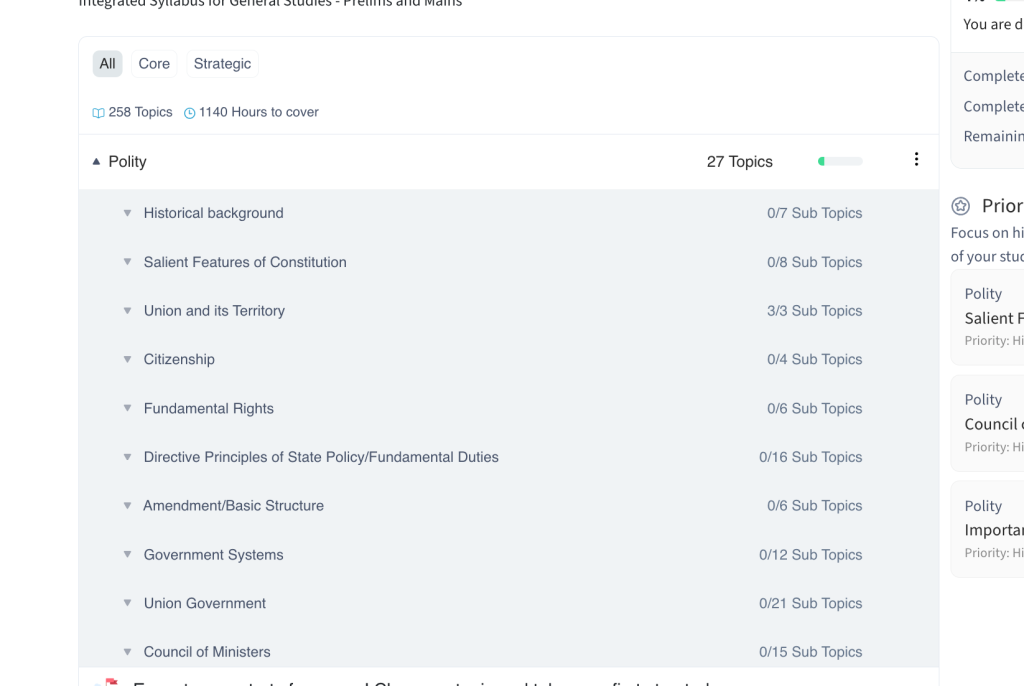
On Yooki, this step becomes easier because you can generate a structured topic list directly from the syllabus, helping you visualize Polity as a map, not a pile of chapters.
Step 2: Identify What Is Actually Important (PYQ Lens)
Not all Polity topics are equally important.
Once you have the topic list:
- Ask: Which topics are repeatedly tested?
- Use PYQs to identify:
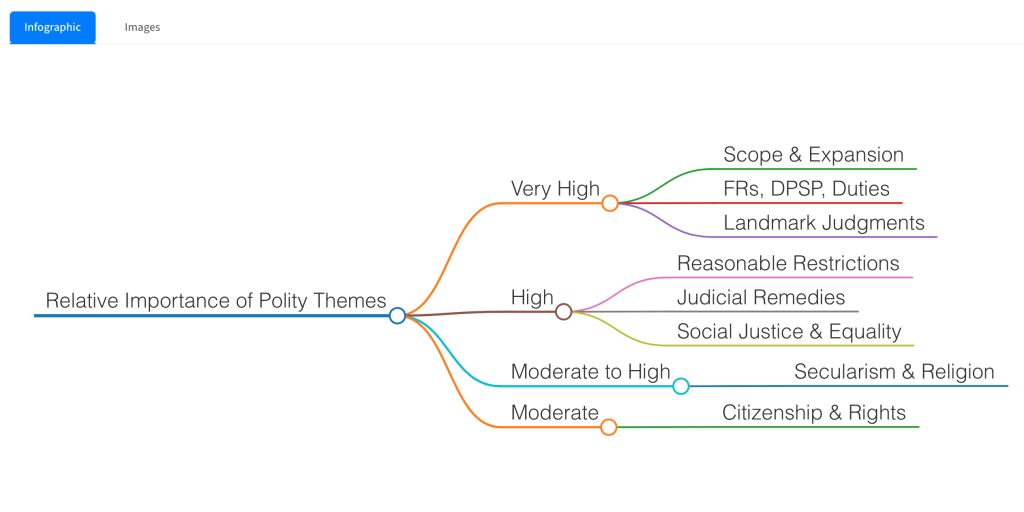
- High-frequency areas (e.g., Fundamental Rights, Parliament, Federalism)
- Conceptual traps (e.g., Governor, Ordinance, Anti-Defection)
With Yooki, you can prompt:
“Show me recurring themes in Polity PYQs related to Federalism.”
This helps you understand:
- Why certain topics matter
- How UPSC frames questions around the same concept
You stop reading Polity blindly and start reading selectively and intelligently.
Step 3: Learn Indian Polity Through PYQs (Using Thinking Prompts)
PYQs should not be treated as a post-study activity.
They should be a learning tool.
For each Polity topic:
- Go through relevant PYQs
- Instead of jumping to answers, ask:
- What concept is being tested?
- What confusion is UPSC trying to create?
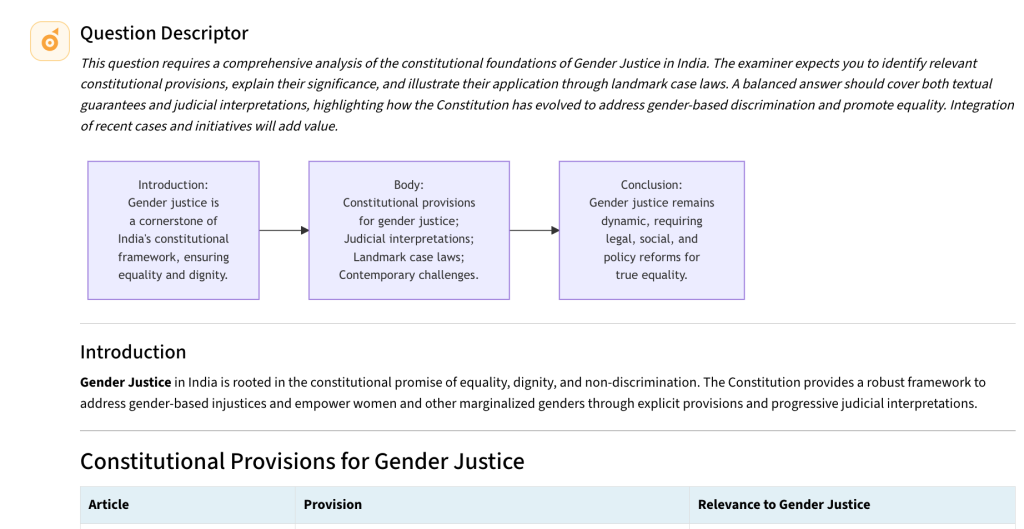
On Yooki, you can use learning prompts such as:
“What are the different ways UPSC has tested the Governor’s role?”
This helps you:
- Learn concepts through questions
- Understand examiner logic
- Avoid rote memorisation
Polity becomes a thinking subject, not a memory-heavy one.
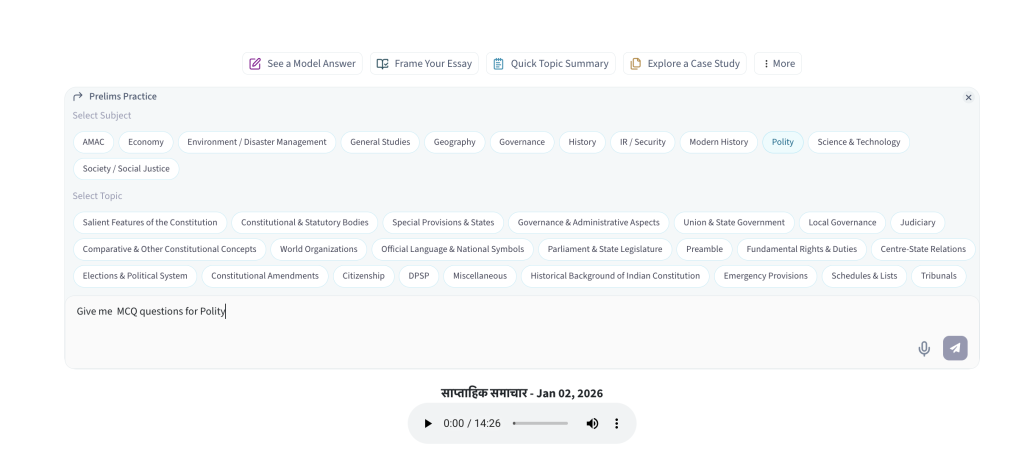
Step 4: Practice with ‘Practice’ Prompts (GS + Prelims)
Once you’ve learned a topic:
- Shift to active practice
- Attempt:
- Prelims-style MCQs
- GS Mains-style short answers
Yooki’s Practice prompts help you:
- Frame answers
- Identify missing dimensions
- Improve structure and clarity
Importantly, Yooki does not write answers for you.
It nudges your thinking — exactly what UPSC rewards.
Step 5: Test Yourself with Curated Indian Polity Tests (MyTests)
Polity requires periodic testing, not one-time revision.
Use MyTests to:
- Attempt curated topic-wise and mixed Polity tests
- Simulate exam pressure
- Identify weak areas early
Because tests are linked to topics:
- You know what you’re weak in
- You can loop back to PYQs and revise efficiently
This closes the learning loop.
How This Indian Polity Workflow Actually Helps
By following this approach, you:
- Study Polity from syllabus to PYQs to practice
- Avoid random reading and over-dependence on notes
- Develop clarity on why answers are correct, not just what is correct
Yooki’s role is simple:
- Organize your thinking
- Surface patterns
- Support disciplined practice
The learning — and the final answers — are always yours.
Final Takeaway
Polity is not difficult because it is vast.
It is difficult because it is often studied without structure.
When you:
- Start with the syllabus
- Identify importance using PYQs
- Learn through question-based thinking
- Practice regularly
- Test and revise systematically
Polity becomes one of the highest scoring and most controllable subjects.
Used thoughtfully, Yooki fits naturally into this process — not as a shortcut, but as a tool that helps you think, practice, and revise better.
Related Blogs