

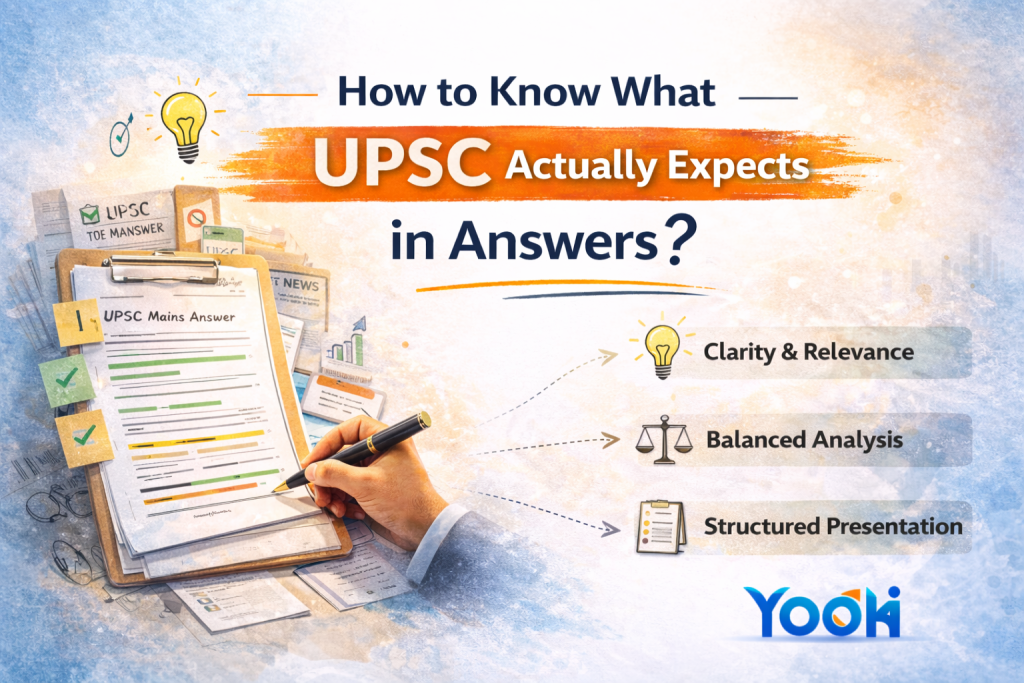
UPSC expects clarity, relevance, and balanced analysis in every answer. It is not looking for information dumping. It wants to see whether you understand the core issue, address the directive properly, and present your thoughts in a structured way.
Start by decoding the directive words. “Discuss” means explain different dimensions. “Critically examine” means strengths plus limitations. “Evaluate” means a reasoned judgment. When you miss the directive, you miss what UPSC actually expects.
Next, study previous year questions and topper copies. Notice how good answers are structured: brief introduction, multi-dimensional body, and a forward-looking conclusion. Depth comes from linking static concepts with current examples, not from writing more pages.
Finally, remember this: UPSC expects maturity, not memorization. Clear thinking, logical flow, relevant examples, and balance are what convert average content into high-scoring answers.
